
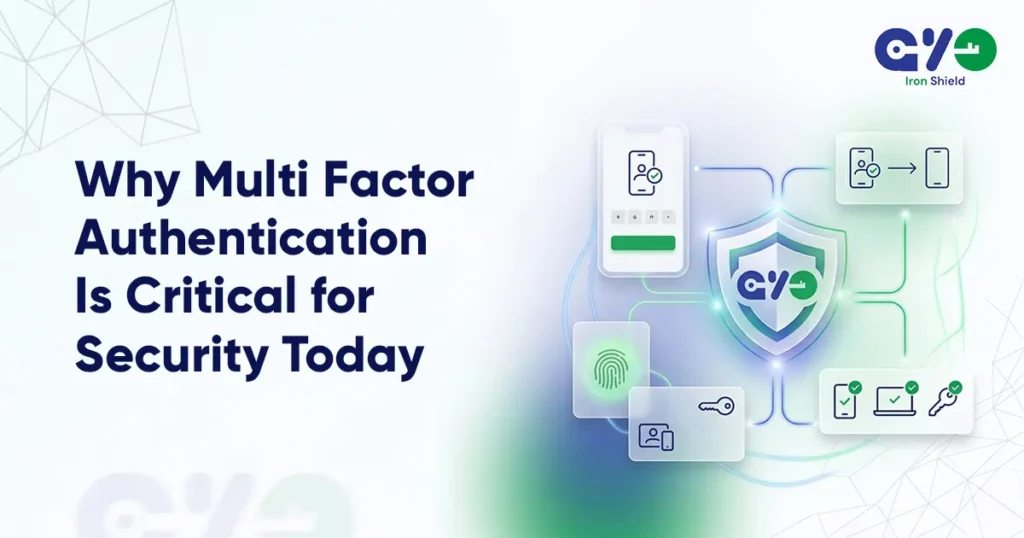
Why Multi Factor Authentication Is Critical for Security Today
Many companies are unaware of how vulnerable their login systems are until something bad happens. Usually, to give attackers access to user accounts, admin panels, payment systems, and customer data takes only three things: reused passwords, phishing emails, and employee credentials publicly leaked from a data breach. The larger issue is that passwords were never intended for the way people are using digital products today. Users are responsible for managing dozens of accounts and frequently reuse their credentials across different platforms; they also have a propensity for forgetting passwords and expect fast log-in experiences across all devices. As a result, companies are caught in a pickle where security has to be higher than ever, while at the same time, the friction related to logging into an account cannot create an issue for conversion. This is the reason why more organisations are using multi factor authentication as a usable component of modern login security. Why Passwords Alone Put Your Business at Risk The use of passwords as a form of verification has been reduced to only being an additional option, as relying on them exclusively produces excessive risk to your safety. A vulnerability would be, for instance, using the same password on several sites. In most account set-ups, if the same password is used across the board, once the password is stolen, all social vendor financial accounts sharing the same password will also be compromised. A credential stuffing botnet group would use software to verify thousands of stolen passwords in minutes against many logins. The evolution of phishing has helped the phished accounts to appear almost like real accounts, and the phishing scams are taking help of even more authentic inputs, i.e., examples include landing pages, fraudulent email links, and schemes based on social engineering for cloning the sites involved in the attack. For businesses, the impact is rarely limited to security teams. Account takeovers affect customer trust, support operations, revenue, and retention. A compromised user account often becomes a customer experience problem before it becomes a technical one. This is where multi factor authentication for business becomes important. Instead of depending on one verification layer, businesses can require additional proof that the person logging in is actually the account owner. What Multi Factor Authentication Really Means Multi factor authentication involves requiring one or more extra validation procedures when logging in or opening an account. The authentication process does not just compare with a password, but confirms users with various types of authentication factors. Something the user knows, password or PIN – A resource the user has, e.g., a phone, authenticator application, or security key. A factor or trait that the user ‘is’ like a fingerprint or a face scan. If one factor is compromised, an attacker then requires access to the second level of verification. MFA implementation for businesses is not limited to banking or enterprise applications anymore; SaaS applications, e-commerce companies, health-related applications, fintech tools, and even internal applications now implement MFA to limit unauthorized access and improve login security. The most significant change is smarter, more tailored authentication. Most of the sites are now using trust-establishing location login or using history and risk factors instead of authentication every time. Types of Authentication Factors & Their Importance Businesses can successfully select the optimal security-user experience combination by knowing the type of authentication factors available. Modern business authentication security solutions often combine multiple verification layers to reduce account compromise without making access difficult for users. Factors Based on Knowledge PINs or Passwords remain one of the most frequently used methods of authentication because they are well known & easy to remember; however, they can be stolen easily via phishing, malware, or because they were previously used by someone else. Possession Factors These factors verify access through something the user physically owns. This includes: Possession-based authentication provides a robust second level of security because an attacker must physically have access to the actual device; they cannot simply gain access through a username and password. Biometric Factors Biometric authentication uses fingerprints, facial recognition, or other unique biological traits as an alternative method to verify identity. This authentication method improves convenience while reducing dependence on passwords, especially for users accessing accounts through mobile devices. Modern mobile authentication experiences often rely on biometric verification to make logins faster, smoother, and more secure. The best methods of implementing secure multi-factor authentication usually involve a balance between strong security and low login friction. Businesses increasingly use secure login with multi factor authentication to strengthen account protection while maintaining a smooth user experience. Companies that focus on usability alone may create an authentication method that users will discard, find another way around, or have difficulty completing. MFA Fatigue Attacks and How to Prevent Them As MFA adoption increases, attackers are also changing tactics. One growing threat is the MFA fatigue attack. In this attack, users receive repeated push notifications asking them to approve login requests. Eventually, some users approve the request accidentally or simply to stop the notifications. This type of attack targets user behavior rather than system vulnerabilities. Strong MFA fatigue attack prevention strategies include: Businesses should also educate employees about unexpected verification requests. Repeated prompts should never be ignored or approved casually. Authentication systems today need to evaluate context, not just credentials. SMS vs Apps vs Passkeys: Which Is More Secure The discussion around SMS vs authenticator apps security has become more important as businesses rethink login protection. SMS OTP Authentication One of the reasons that SMS OTPs continue to be a popular method of authentication is due to the ease with which they can be accessed and used. They are particularly effective when it comes to onboarding new users and getting current users to adopt the platform, particularly if you have a large or non-technical user base. However, there are some limitations with SMS authentication, such as: Authenticator Apps Authenticator apps generate verification codes directly on the user’s device. Because they do not rely on SMS delivery, they are generally considered more secure