
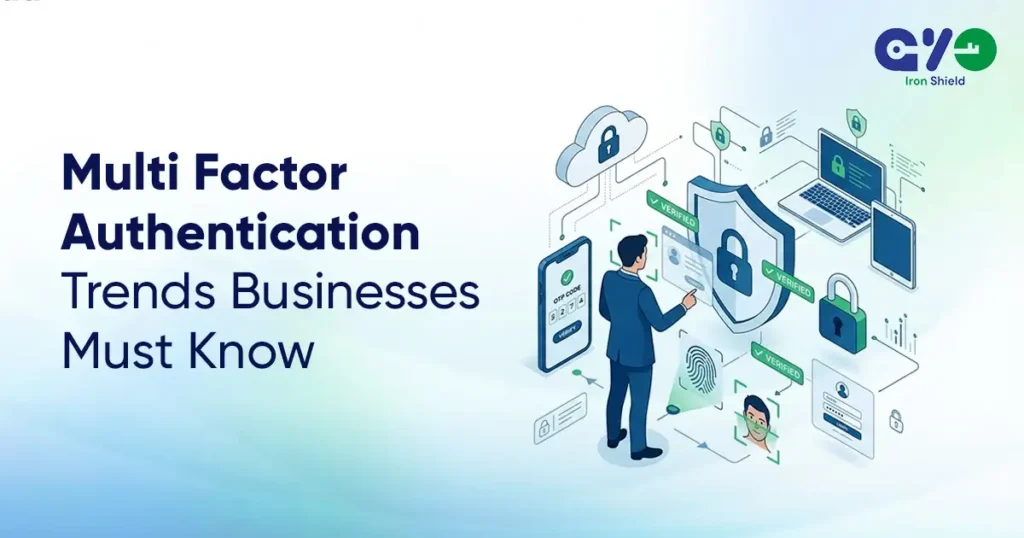
Multi Factor Authentication Trends Businesses Must Know
One user registers on your platform, asks for an OTP, waits a moment, and goes away even before the OTP is sent to him/her. Another one uses a password for a login that was leaked during a data breach several months ago. A third user walks away from the onboarding step as the secure login verification step appears to be too complex.At first glance, they can be three different situations, but they all reflect the common difficulty: authentication. Nowadays, authentication has become more than just protecting accounts. Businesses have understood that customer authentication methods have various effects, such as onboarding conversion, login success rates, fraud risk, customer trust towards the brand, and overall efficiency. The organization should keep up with these authentication trends 2026 when they think about their security and user access policies. What is Multi Factor Authentication and Why It Matters Multi factor authentication implies users authenticating themselves through two or more verification elements before they are allowed to access an account or make a confidential transaction. Normally, these elements are grouped into three classes: It is not just about introducing a new step for identity verification when we think of MFA security. At the same time, it fortifies the security layer in situations where passwords are leaked, reused, or broken into. In other words, it translates to fewer unauthorized access incidents, higher customer trust, and better protection of accounts that contain sensitive information, payment details, or business data. Why Businesses Are Moving Beyond Password-Only Security Passwords have been the standard way of authentication for many years, but they are increasingly causing operational and security issues. People often forget their passwords, use the same ones on different sites, and frequently pick very easy ones just for their own convenience. If any problems happen during login, the company will have more support requests, spend more money on account recovery, and lose customer satisfaction. Besides impairing user retention, password-related problems may also result in losing customers. The complicated login procedure may delay the registration of a new user and lower the conversion rate before the user even comes to know the product. With the scaling of digital platforms, companies are proceeding with the implementation of various modern security measures for login that rely less on passwords and, at the same time, offer more accurate verification and better user experience. The attention is now being drawn not just to the safety of access but also to the development of authentication processes that users can carry out in a fast and confident manner. Passwordless Authentication Is Becoming Mainstream One major authentication trend is the increasing adoption of passwordless authentication. In this way, instead of making users create and memorize passwords, businesses allow them to use OTPs, magic links, biometrics device-based verification, and trusted authentication methods for their access without the need for a password. The rationale is simple. On one hand, passwordless authentication is a great way to: Reduce the number of password reset requests Then again, it accelerates the onboarding process and increases the number of users who are successfully logged in. Those product teams whose main responsibility is growth will discover that removing the password roadblock is one of the ways by which they can enhance user activation and retention even as they continue to provide a safe experience. Growing Demand for WhatsApp and SMS OTP Authentication Despite the rise of other verification methods, OTP-based authentication continues to be one of the most widely used methods. After all, people trust OTP, it’s convenient, and it can easily be explained to users. Though companies are no longer limiting themselves to a single delivery channel. Verifying WhatsApp OTP is gaining popularity as people are using messaging apps more and more. Still, SMS OTP is very important as it works on any phone and can be used worldwide. These changes have mainly addressed real issues, for example: Slow sending of OTPs when there are a lot of users Problems of delivering messages for international communications Users switching to new phones when signing up Failures to login caused by delivery issues This is the biggest reason why companies are adopting authentication solutions that offer several verification options rather than a single method. The goal is quite simple and to the point: maintain the authentication integrity even if one of the communication channels is compromised. Multi-Channel Authentication Is Becoming a Business Requirement Authentication reliability has become a huge factor in the overall assessment of digital platforms. The failure to deliver verification codes to users simply means that they cannot create accounts, log in, make purchases, or use services. So, it is no wonder that using different types of authentication channels to complement the main one has become one of the most preferred methods by companies nowadays. SMS verification WhatsApp verification Email OTPs Options for passwordless login Rather than forcing users to authenticate via a single method, smart companies use their knowledge to route verification requests through the most efficient and effective channel available. This approach leads to increased login completion rates, reduced onboarding friction, and the establishment of a stronger authentication network. Authentication availability is, for growing platforms, becoming just as important as application availability. Adaptive MFA and AI-Based Risk Detection Trends Traditional authentication often considers all login attempts the same. Newer systems do not. Adaptive MFA looks at context based on real-time and changes verification needs given risk. Such signals might be: Device reputation Geographic location Login history User behavior patterns Network characteristics This security-enhancing method is user-friendly and lowers the chances of harming legitimate users. Besides, machine learning is already deeply integrated in making authentication decisions. AI-enabled systems, by recognizing abnormal behavior, can pinpoint possible security breaches and perform secure verification of login without much human help. How MFA Helps Account Takeover Prevention and Fraud Account takeover is still one of the leading threats for digital companies. Besides the direct impact of a security event, attackers accessing a customer account may also lead to financial and support cost losses, damage to the